
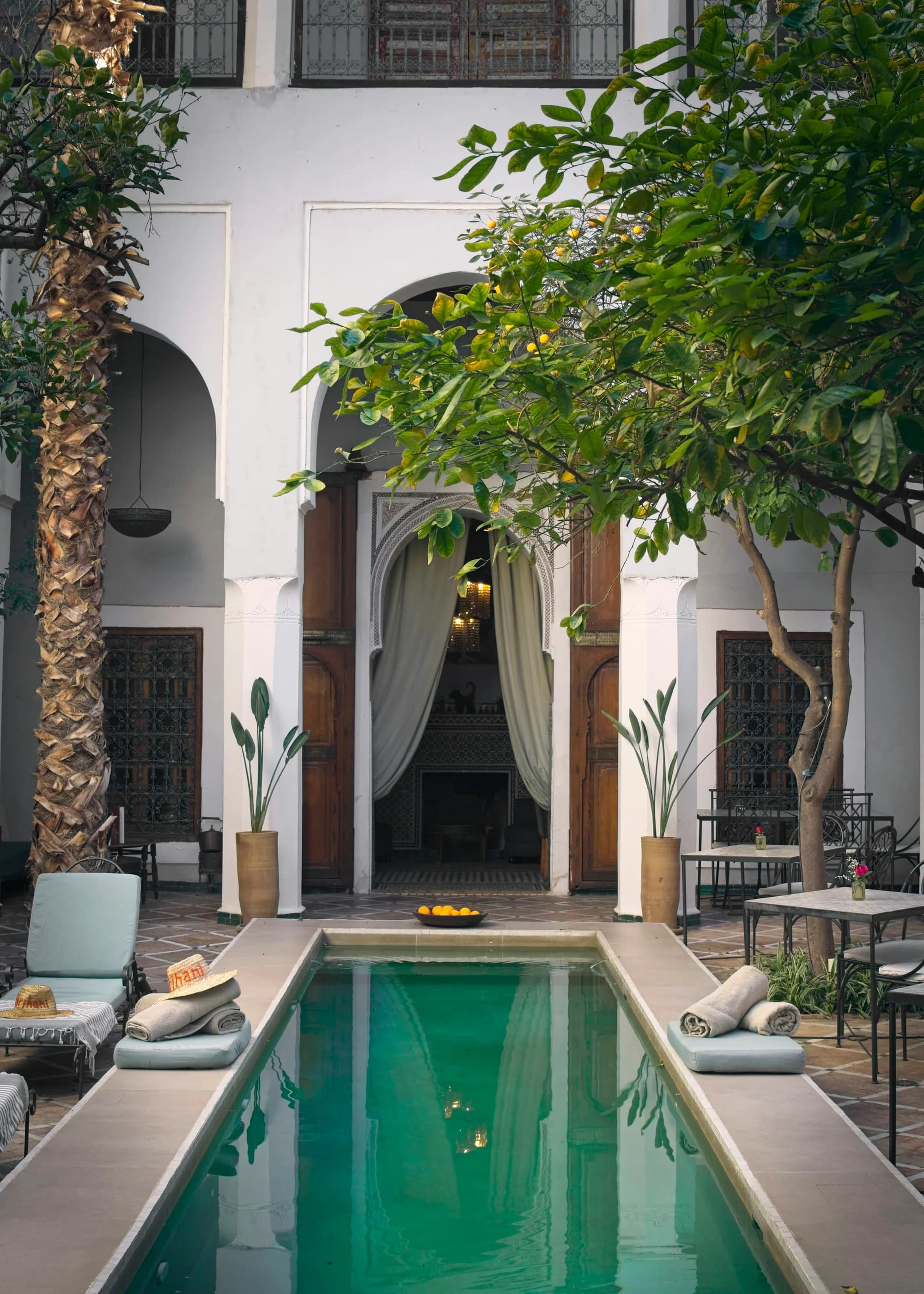
How to Explore Morocco's Medinas Without Rushing
A Moroccan medina is not a preserved stage set. It is an old city where people live, work, worship, shop, study, and move through streets that were shaped long before cars. The Moroccan National Tourist Office describes medinas as walled historic quarters filled with homes, workshops, fountains, mosques, markets, and inherited craft traditions. That living character is exactly what makes them rewarding—and why they should not be approached as a checklist of photo stops.
Fes, Marrakech, Essaouira, Tetouan, Rabat, Meknes, and smaller cities each have a different scale and rhythm. The best visit leaves room for architecture, daily life, and a few purposeful stops instead of trying to cover every alley.
Choose the medina for the experience you want
Fes is deep, layered, and strongly connected to traditional crafts and religious learning. Marrakech is energetic, with major monuments, souks, riads, food, and Jemaa el-Fna. Essaouira is smaller, coastal, and generally easier to read on foot. Rabat's medina and Kasbah of the Oudayas can fit into a broader capital-city day, while Tetouan carries a distinct Andalusian character.
Do not treat them as interchangeable. If craftsmanship is the priority, Fes may deserve more time. If the traveler wants a gentler first encounter, Essaouira or Rabat may feel more manageable. A route becomes better when each medina has a clear reason to be included.
Allow more time than the map suggests
Distances inside a medina can look short but take longer because lanes are narrow, surfaces vary, and points of interest are not arranged in a straight line. Deliveries, handcarts, animals, school traffic, prayer times, and market activity are part of the environment. A relaxed half-day with a few well-chosen visits is often more satisfying than a long list completed at speed.
Wear stable shoes and keep water accessible. Travelers with limited mobility should discuss steps, slopes, uneven paving, rest points, and the nearest vehicle access before setting out. A driver can meet at an accessible gate, but many historic interiors still require walking.
Know when a local guide adds value
A guide is most useful where the street pattern is complex and the context matters. In Fes, for example, a knowledgeable guide can connect workshops, architecture, community history, and entrances that are easy to pass without noticing. In smaller medinas, independent wandering may be comfortable, but a focused guide still adds depth for Jewish heritage, architecture, food, or craftsmanship.
Agree on the emphasis before starting. A historical walk, shopping visit, food tour, and photography outing should not follow the same route. If shopping is included, say whether you want artisan demonstrations, particular materials, or no retail stops at all.
Enter the souks with curiosity and clear boundaries
Souks are working markets, not a single attraction. The official tourism guide describes them as places of trade commonly found within old medinas, while Morocco's craft traditions vary by region: leather and metalwork in Fes, carpets and jewelry across several cities, ceramics associated with Fes, Safi, and Meknes, and thuya woodwork in Essaouira.
If an item interests you, ask about the material, origin, maker, dimensions, care, and fixed or negotiable price. Compare calmly and buy because you value the object, not because a demonstration creates pressure. If you are only looking, a polite thank-you and a clear refusal are enough. For expensive or antique items, ask for documentation and shipping terms in writing.
Photograph people and sacred places respectfully
Architecture and street scenes are tempting subjects, but a public lane is also someone's workplace or front door. Ask before making a close portrait, photographing an artisan at work, or pointing a camera into a shop or home. A refusal does not require negotiation.
Mosques, synagogues, cemeteries, shrines, and religious schools have their own access and photography rules. Some are active worship spaces; others may require a custodian or scheduled visit. Dress and behave with the same care you would expect at a sacred site at home, and follow the guidance given at the entrance.
Notice the city beyond the monuments
The value of a medina is not limited to famous buildings. Look at how doorways, fountains, neighborhood ovens, fondouks, workshops, markets, and places of worship fit together. The official tourism office emphasizes that medina culture appears in architecture, daily life, and crafts passed between generations.
This is also why a slower route is more revealing. Time for tea, a bakery, a workshop conversation, or a quiet residential lane can explain the city more clearly than another rushed monument.
Plan the exit as carefully as the entrance
Agree on the gate, vehicle meeting point, and approximate finish before the walk. Mobile mapping can help, but dense lanes and covered passages may reduce accuracy. Keep the hotel name and a local contact available offline. In a guided visit, confirm where the driver will meet you rather than assuming the entry gate is also the best exit.
- Start earlier for cooler temperatures, gentler light, and less crowding.
- Keep the route focused on two or three themes.
- Carry only what you need and secure valuables without becoming anxious.
- Ask before photographing people or private workspaces.
- Build in a seated pause, especially in heat or on longer walks.
- Leave space to follow an interesting detail rather than racing the list.
A good medina visit is structured enough to avoid confusion and open enough to let the old city reveal itself. Browse our Morocco destination guides, explore private tours, or ask for a city walk shaped around your interests and pace.
Official cultural references
Keep Reading
Related articles

Mobility-Aware Morocco Travel: Planning Private Tours with Less Walking
Plan a more comfortable Morocco journey with realistic medina access, vehicle positioning, hotel questions, rest stops, and airport assistance.
Read Article
Best Time to Visit Morocco: Plan by Region, Not One Forecast
Choose when to visit Morocco by matching the season to the Atlantic coast, imperial cities, Atlas Mountains, and desert route you actually want.
Read Article
Casablanca Before or After a Group Tour: How to Use an Extra Day Well
Turn a free half-day, full day, layover, or extra night in Casablanca into a private experience that fits around your confirmed group itinerary.
Read Article