
Best Time to Visit Morocco: Plan by Region, Not One Forecast
There is no single best month for every Morocco journey. Casablanca and Essaouira are shaped by the Atlantic, Marrakech and Fes have stronger inland temperature swings, the Atlas adds altitude, and the southeast opens toward desert conditions. A forecast for one city cannot describe a route that crosses several of those landscapes.
The useful question is not simply when Morocco is warm. It is which regions you want to combine, what you want to do there, and how comfortable you are with heat, cool evenings, rain, wind, or snow at elevation. Once those priorities are clear, the calendar becomes much easier to read.
Spring balances cities, mountains, and the southeast
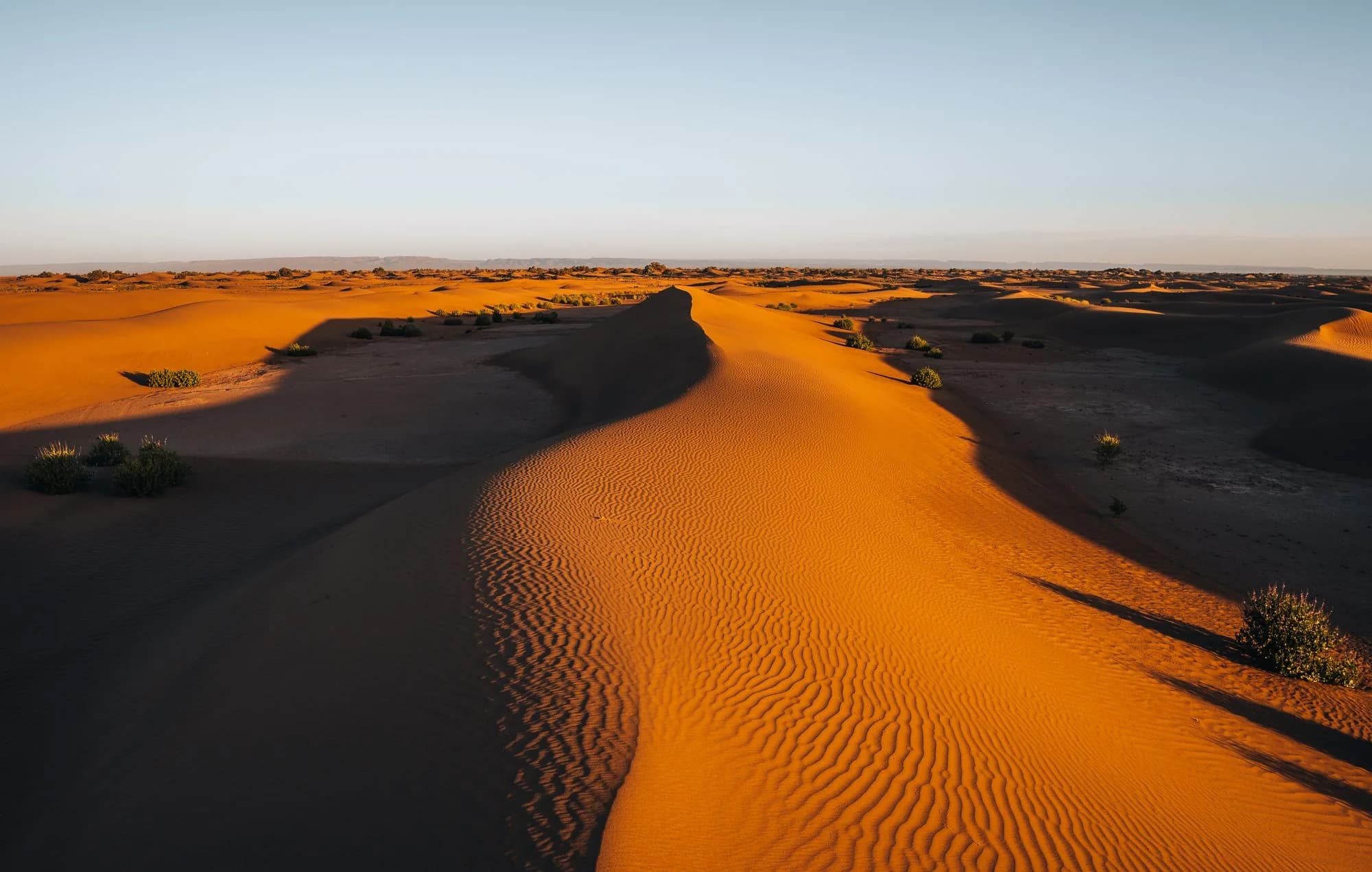
March through May is one of the most adaptable periods for a multi-region itinerary. The Moroccan National Tourist Office specifically recommends spring and autumn for the Saharan south, and its destination guidance lists March to May among the best periods for Marrakech and Ouarzazate. Inland days can be warm without the sustained summer heat, while mountain scenery may still include snow on higher summits.
Spring is not identical from week to week. March can still bring cool evenings and changeable mountain weather; May can already feel hot in Marrakech and the southeast. Pack layers and keep altitude in mind rather than assuming one daytime temperature will hold across the route.
Autumn is strong for desert routes and cultural touring
September through November is another flexible window, especially for travelers who want imperial cities with a desert extension. September may remain hot inland, while October and early November often provide a more comfortable balance for walking, road travel, and outdoor visits. The official tourism guidance again favors autumn for the desert regions.
Later autumn can bring shorter days and a greater chance of rain in northern and Atlantic areas. That does not make the season unsuitable, but it does affect how much can fit into a touring day and whether exposed outdoor stops need an alternative.
Summer works best when the route respects geography
June through August can suit Atlantic stays, northern cities, and higher-elevation escapes, but a route built around long afternoons in Marrakech or the desert needs more care. Morocco's meteorological service describes major regional contrasts: Atlantic coastal temperatures are moderated, while western inland plains can exceed 40°C in summer. The tourism office also notes that sea breezes soften temperatures along the coast.
A good summer plan starts earlier, reduces exposed walking at midday, uses shaded or indoor visits during the hottest hours, and treats water and rest as part of the schedule. Essaouira, Agadir, Tangier, and other coastal areas may feel very different from inland cities on the same date. Desert travel should be chosen deliberately rather than added automatically to every itinerary.
Winter favors cities and the coast, with cooler nights
December through February can be rewarding for Casablanca, Rabat, Marrakech, Fes, and Atlantic touring. Crowds may be lighter in some places, and daytime sightseeing can be comfortable. The trade-off is that evenings and mornings can be cold, particularly inland, in traditional buildings, and near the mountains.
Winter in Morocco does not mean one type of weather. The official tourism office notes mild coastal conditions while higher elevations can be cold, wet, and snowy. Mountain passes and trekking plans need current local information. In the desert, sunny days can be pleasant but temperatures can fall sharply after sunset, so warm layers remain essential.
The Atlantic coast follows a different rhythm
Casablanca, El Jadida, Essaouira, and Agadir do not behave like Marrakech or Ouarzazate. Ocean influence can moderate temperatures, add breeze, and create mist or cloud even when inland skies are clear. That makes the coast useful in summer, but beach weather is never guaranteed by a national forecast.
Travelers interested in architecture, food, Jewish heritage, and city life do not need perfect beach conditions to enjoy the coast. If swimming or water sports are central, check the specific destination, wind pattern, and current sea conditions instead of planning from air temperature alone.
The Atlas requires an altitude plan
Mountain weather changes with elevation and can shift quickly. A warm day in Marrakech does not guarantee the same conditions at a high pass or trailhead. Snow, rain, road conditions, and daylight can affect both trekking and transfers across the Atlas.
For a village visit or short walk, bring footwear and layers suitable for the actual elevation. For serious trekking, use an experienced mountain guide and confirm seasonal conditions close to departure. A flexible alternative is especially important in winter and during unsettled weather.
Choose the month from the hardest part of the route
If the journey combines several regions, let the least flexible activity guide the date. A desert circuit, mountain trek, beach stay, religious holiday, family event, or fixed conference may narrow the window. City visits can usually be adapted around that anchor with earlier starts, indoor stops, or a different pace.
- For a broad first journey with cities and desert, begin by comparing spring and autumn.
- For summer, emphasize the coast, north, or elevation and limit midday exposure inland.
- For winter, plan for cool interiors, cold evenings, and possible mountain disruption.
- For mobility-sensitive travel, avoid building long exposed walks into the hottest part of the day.
- For any season, check the short-range forecast shortly before each regional movement.
The best season is the one that supports the journey you actually want, not the one described by a single national average. Share your preferred regions, interests, and comfort range, and the route can be shaped around the season rather than fighting it.
Explore our Morocco destinations, browse private tour ideas, or ask for a route matched to your travel dates.
Official climate references
Keep Reading
Related articles

Mobility-Aware Morocco Travel: Planning Private Tours with Less Walking
Plan a more comfortable Morocco journey with realistic medina access, vehicle positioning, hotel questions, rest stops, and airport assistance.
Read Article
How to Explore Morocco's Medinas Without Rushing
Understand how Morocco's medinas work, when a guide helps, what to expect in the souks, and how to explore living historic neighborhoods respectfully.
Read Article
Casablanca Before or After a Group Tour: How to Use an Extra Day Well
Turn a free half-day, full day, layover, or extra night in Casablanca into a private experience that fits around your confirmed group itinerary.
Read Article