Preparing your journey…
More to discover
Explore Morocco
Quick access to inspiration, services and trip planning.
Preparing your journey…

Discover the synagogues, mellahs, cemeteries, and living traditions that tell the story of Jewish life in Casablanca.
1,000+
Jews still live here
15+
Active synagogues
1
Jewish museum in the Arab world
1949
Overview
Casablanca is home to Morocco's largest surviving Jewish community and the only Jewish museum in the Arab world. The city's Jewish heritage is a living legacy — active synagogues, kosher restaurants, Jewish schools, and community centers coexist alongside the bustling modern metropolis. The Museum of Moroccan Judaism, established in 1997, houses an extraordinary collection of ritual objects and documents spanning centuries of Jewish life in Morocco. Temple Beth-El, established in 1949 in a stunning Moorish-Byzantine style, remains one of the most beautiful synagogues in North Africa. Unlike many other cities where Jewish heritage is purely historical, Casablanca's Jewish community is vibrant and active — making it a uniquely immersive destination for heritage travelers seeking to witness living tradition alongside ancient history.
Heritage Sites
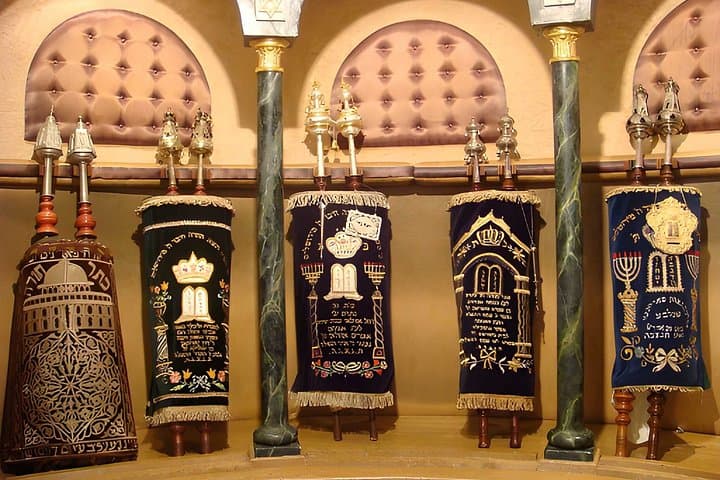
The only Jewish museum in the Arab world. Houses an extraordinary collection of ritual objects, photographs, and community artifacts in a building originally built as a Jewish orphanage in 1948.
Casablanca's main synagogue, established in 1949 by Algerian Jewish immigrants in a striking Moorish-Byzantine style. Its stained glass windows and ornate interior make it one of Morocco's most beautiful synagogues.
A beautifully restored synagogue in the heart of the old mellah, known for its intimate atmosphere and historical significance.
Through the Ages
Key moments in the Jewish history of Casablanca.
As Casablanca modernizes under French protectorate influence, a vibrant Jewish community establishes itself in the Oasis neighborhood and around Rue El Mellah.
Algerian Jewish immigrants establish the magnificent Moorish-Byzantine synagogue, which becomes the spiritual center of Casablanca's Jewish community and an architectural landmark.
A Jewish orphanage is constructed in the Oasis neighborhood — the building that would later become the Museum of Moroccan Judaism.
The only Jewish museum in the Arab world opens its doors, preserving centuries of Moroccan Jewish heritage in a 700-square-meter exhibition space.
Explore on Foot
Start at the Museum of Moroccan Judaism (Oasis neighborhood)
Visit Temple Beth-El on Rue Vienne
Walk through Rue El Mellah and the old market
Visit the Ettedgui Synagogue
End at the Casablanca Old Jewish Cemetery
Living Heritage
Casablanca is home to the majority of Morocco's remaining Jewish community. The city maintains synagogues, kosher dining options, Jewish educational institutions, and community organizations. The Museum of Moroccan Judaism also serves as an important cultural institution. Community size and service schedules change over time, so visits to active religious sites should be confirmed in advance.
Common Questions
Yes, the Museum of Moroccan Judaism is open to visitors. It is located in the Oasis neighborhood and houses an extraordinary collection of Moroccan Jewish artifacts, ritual objects, and documents. Admission is affordable — check current rates before your visit.
Temple Beth-El welcomes respectful visitors. A licensed guide can arrange a visit and provide context about the synagogue's architecture, history, and role in the Casablanca Jewish community.
A half-day tour (4 hours) covers the main sites: the Jewish Museum, Temple Beth-El, the Mellah, and the cemetery. A full-day tour allows for a more relaxed pace with additional sites and deeper exploration.
Plan Your Journey
Tell us your dates, group size, and interests. We'll craft a personalized Casablanca heritage itinerary and send you a detailed proposal within 24 hours.
This opens WhatsApp with your message ready to send.
Temple Beth-El built
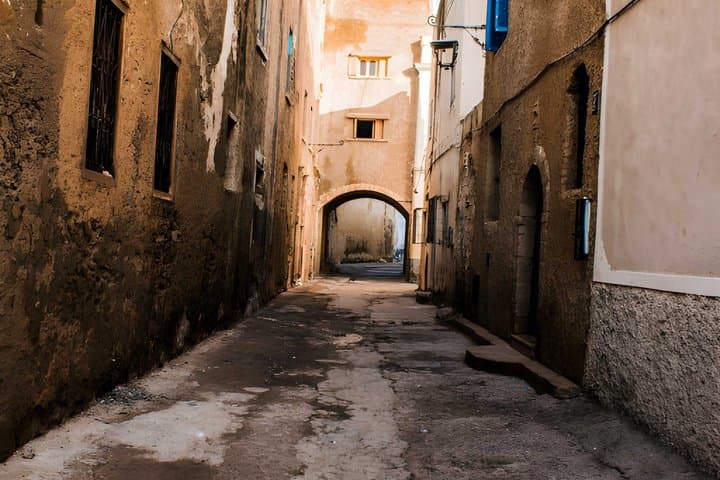
Walk through Casablanca's historic Jewish quarter, where traces of the old Jewish market remain alongside the vestiges of a once-thriving Jewish neighborhood.
One of the most impressive Jewish cemeteries in Morocco, with well-kept markers in French, Hebrew, and Spanish spanning centuries of Jewish life.
Morocco's new constitution formally recognizes Jewish heritage as part of the nation's identity, affirming the inseparable bond between Jewish and Moroccan culture.
Best Time to Visit
Year-round. Spring (March-May) and autumn (September-November) offer the most pleasant temperatures.
Duration
Half-day (4 hours) to full-day tour recommended.
Kosher Dining
Multiple kosher restaurants available. Your guide can arrange kosher meals in advance.
Accessibility
Accessibility varies by site. Historic buildings may include steps, narrow passages, or uneven surfaces; ask us to confirm access requirements site by site before booking.