
Ozar Hatorah in Morocco: The Complete History of Neve Shalom and Its Legacy
Ozar Hatorah became one of the most influential Jewish educational networks in twentieth-century Morocco. Its schools paired Jewish religious learning with general studies, reached communities far beyond Casablanca, and helped train a generation whose lives later unfolded in Morocco, Israel, France, Canada and elsewhere.
This guide tells that story while correcting several numbers and dates that are often repeated online without context. Historical enrollment totals do not always agree, the first Casablanca opening is variously dated to 1947 or 1948, and the claim that Morocco had exactly 1,000 Jewish residents in 2025 should not be treated as settled fact.
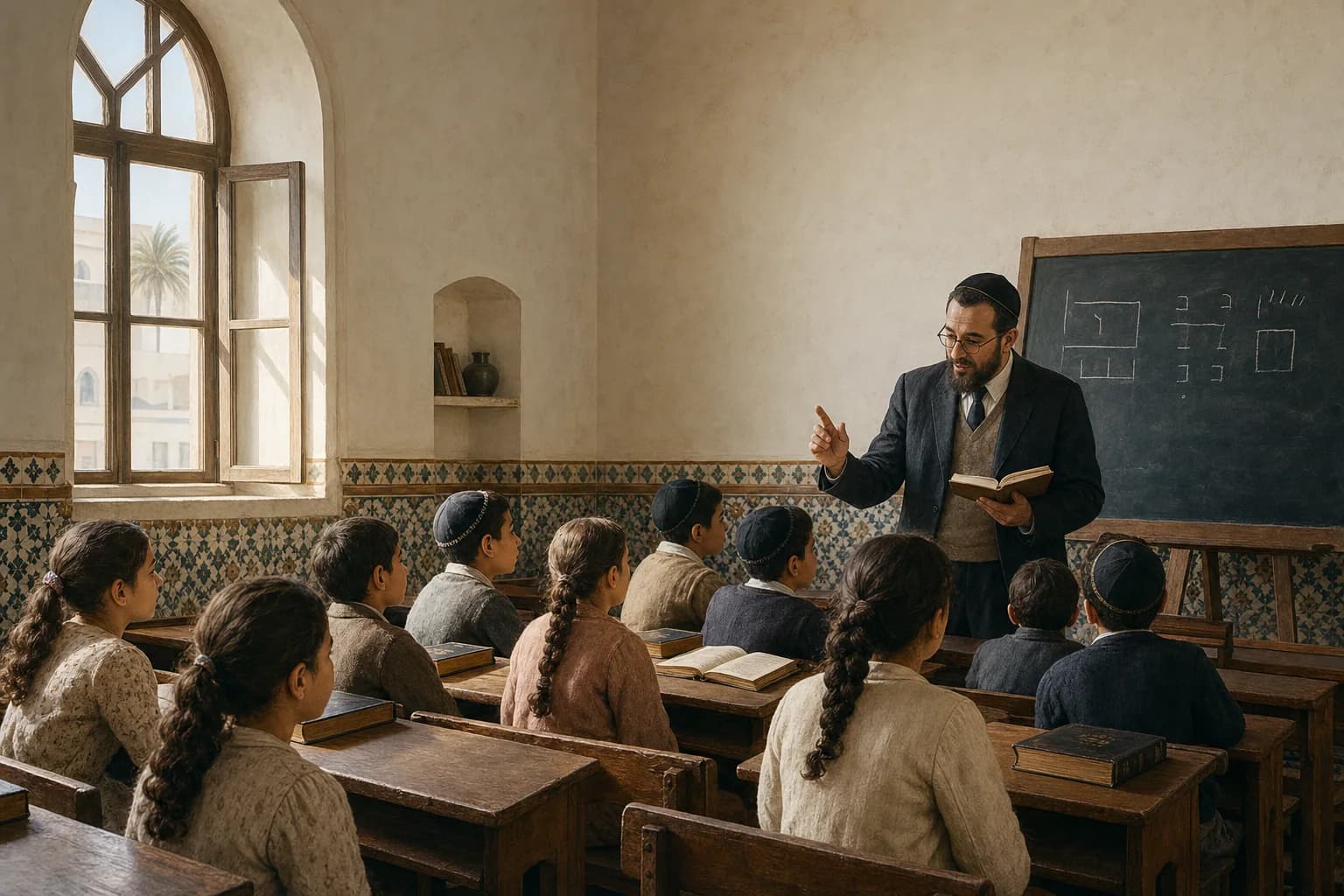
Hero image: an original editorial illustration inspired by mid-century classrooms in Casablanca. It is not an archival photograph and does not portray a specific class or named person.
What was Ozar Hatorah?
Ozar Hatorah—also written Otzar Hatorah or Oẓar ha-Torah, meaning “Treasure of the Torah”—was established in 1945 as a nonprofit educational organization. Encyclopaedia Judaica's reference entry identifies its founders as Isaac Shalom of New York, Joseph Shamah of Jerusalem and Ezra Teubal of Buenos Aires.
The founders believed that Jewish communities across the Middle East and North Africa needed schools capable of sustaining religious knowledge while also preparing children for modern civic and professional life. Their answer was a dual curriculum: Jewish studies alongside secular subjects, supported through a mix of private philanthropy, local communities and the American Jewish Joint Distribution Committee (JDC).
Some accounts date the organization to 1944, but the strongest reference sources place its formal establishment in 1945. Likewise, the frequently repeated claim that its founders immediately donated $250,000 to schools in Israel could not be confirmed in the institutional and scholarly sources reviewed for this article, so it should not be presented as established fact.
When did Ozar Hatorah open in Morocco?
The safest answer is 1947–1948. Some sources describe Ozar Hatorah's Moroccan work as beginning in 1947. The network's own history, however, says that three Moroccan schools opened in 1948 and identifies the Casablanca school as Neve Shalom. The National Library of Israel also documents the later Ozar Hatorah primary-school building in Casablanca.
That one-year discrepancy is best understood as a difference between organizational activity and the opening of named schools, not as a reason to force a false precision. A careful history can say that the network entered Morocco in the immediate postwar period, with Casablanca's Neve Shalom dated by Ozar Hatorah itself to 1948.
Rapid growth across Morocco
Ozar Hatorah expanded quickly. Its official history reports 44 schools and 5,440 pupils in Morocco during the 1953–54 school year. A contemporary 1950 survey had counted roughly 4,400 children in affiliated schools, making the scale of that early growth credible.
Later totals are much harder to reconcile. The National Library of Israel says the schools were educating 30,000 students by 1957, while other retellings give 15,000 students in 1961, or 3,100 students spread among 19 schools in another period. Those figures may refer to different definitions—Morocco alone versus the international network, all supported institutions versus directly operated schools, or annual participation versus current enrollment.
For that reason, none of those disputed totals should be used as a single, definitive “peak.” The better-documented milestones are:
- 1953–54: Ozar Hatorah's own history records 44 Moroccan schools and 5,440 pupils.
- 1970: Encyclopaedia Judaica records 23 schools and one summer camp in Morocco.
- By the early 1990s: most Jewish schools outside Casablanca had closed as the country's Jewish population declined through emigration.
The change from 44 establishments to 23 does not mean the project simply failed. It reflects the profound demographic transformation of Moroccan Jewry after 1948, when families left for Israel, France, Canada and other destinations.
Neve Shalom in Casablanca
Neve Shalom became Ozar Hatorah's best-known Moroccan institution and its most visible surviving legacy. Rabbi Aharon Monsonego returned to Morocco in 1952, directed Casablanca's Talmud Torah and later led Ozar Hatorah in Morocco. Biographical accounts credit him with founding a religious school and a Jewish girls' secondary school in the city. He would later serve as Morocco's chief rabbi.
The claim that the present Neve Shalom building was constructed in 1961 under Monsonego's leadership is repeated in heritage-tour material, but a strong independent source for that exact construction date was not found. It is better to credit his central leadership without turning the building date into an unquestioned fact.
Neve Shalom's continuing role is better documented. The JDC's current Morocco profile describes its support for the Ozar Hatorah Neve Shalom School in Casablanca, including Jewish educational seminars, computer literacy and intensive French and mathematics courses. The school belongs to the living community described in our guide to Jewish heritage in Casablanca, not only to the city's past.
What made the curriculum different?
Ozar Hatorah's defining idea was not religious education alone, but the combination of Jewish studies and general education. Torah knowledge, Hebrew, religious practice and Jewish history sat alongside subjects needed for wider academic and professional life.
Later Ozar Hatorah curriculum descriptions include Torah or Houmach, religious law (dinim), the weekly Torah portion and Jewish history. Some summaries of the Moroccan schools add Talmud, Mishnah, Prophets and Rashi's commentary. Those subjects are consistent with an advanced religious curriculum, but the exact program likely differed by school, age and period. It is more accurate to describe the educational model than to claim every pupil followed one identical syllabus.
Ozar Hatorah and the Alliance Israélite Universelle
The relationship with the Alliance Israélite Universelle (AIU) is often reduced to a simple rivalry. The real picture was more complicated.
The Alliance had opened its first Moroccan school in Tetouan in 1862 and built a major French-language educational network. Ozar Hatorah's Moroccan representatives sometimes criticized Alliance teachers as overly secular and feared that French-centered education could weaken religious continuity. That disagreement reflected genuine competing visions of Jewish modernity.
Yet the two systems were not isolated enemies. Both served Moroccan Jewish families, both received JDC support at different points, and Ozar Hatorah sometimes provided Jewish instruction in Alliance schools elsewhere in its international network. Claims that a proposed consolidation was simply an “AIU plot” should therefore be presented as the rhetoric of a tense institutional moment, not as an objective historical conclusion.
The Tangier girls' school
Tangier was an important part of Ozar Hatorah's Moroccan reach. A biography of Moshe Yosef “Paul” Reichmann says that Rabbi Abraham Kalmanowitz appointed him educational director in Casablanca in 1953 and credits him with helping establish dozens of schools, including the first Ozar Hatorah girls' seminary in Tangier.
The year 1955 is often attached to that opening, but the biographical source confirms the initiative rather than the exact year. The safest formulation is that Reichmann helped create the Tangier girls' institution in the mid-1950s. Its significance remains clear: the network's expansion was geographical and also extended formal religious learning for girls.
From Morocco to France
As North African Jewish migration reshaped European Jewish life, France became the network's main arena. Ozar Hatorah's institutional history credits Isaac Shalom with establishing a school in Lyon in 1964. Ozar Hatorah France was organized as a French nonprofit in 1968, later developing schools in the Paris region and other French cities.
This distinction matters: 1964 refers to the Lyon school, while 1968 refers to the formal French association. The network's growth in France carried forward an educational model already tested among Sephardi and Mizrahi communities in Morocco and elsewhere.
How large is Morocco's Jewish community today?
Morocco had roughly 250,000 to 270,000 Jewish residents around 1948. Today's community is far smaller, but the statement “there were exactly 1,000 Jews in Morocco in 2025” is not sufficiently supported.
The World Jewish Congress cites an estimate of about 2,100 people in 2020 and separately describes Casablanca as home to roughly 1,000 Jews. This is probably the source of some confusion: 1,000 is widely cited for Casablanca, not securely for the whole country. More recent journalistic estimates commonly place the national community between approximately 1,500 and 2,000, but demographic counts vary with definitions of permanent residence and communal affiliation.
For travelers, the responsible description is that Morocco retains North Africa's largest organized Jewish community, centered in Casablanca, while its much larger Moroccan Jewish diaspora maintains deep family, religious and cultural ties to the kingdom.
Can travelers visit Neve Shalom?
Neve Shalom is an educational institution, not a conventional tourist attraction. Any visit must be arranged in advance, and access can change according to the school calendar, safeguarding needs and community security. Visitors should never arrive unannounced or photograph pupils without explicit permission.
A thoughtfully planned Jewish heritage journey through Morocco can place the school in a wider story that includes Casablanca's Museum of Moroccan Judaism, active synagogues, historic cemeteries and restored communal sites. School access should never be promised; respectful context is more important than checking off a private institution.
Frequently asked questions
Was Ozar Hatorah founded in 1944 or 1945?
The organization is most reliably dated to 1945. Preparatory philanthropy and earlier educational activity may explain why 1944 appears in some accounts.
Did the first Casablanca school open in 1947 or 1948?
Sources differ. Ozar Hatorah's own history says three Moroccan schools opened in 1948, including Neve Shalom in Casablanca. It is reasonable to describe Moroccan operations as beginning in 1947–48.
Did Ozar Hatorah have 15,000 or 30,000 pupils in Morocco?
Both numbers circulate, but the source definitions are unclear and conflict with other institutional totals. The strongest precise figure found is Ozar Hatorah's own count of 5,440 Moroccan pupils in 44 schools in 1953–54.
Is Neve Shalom still active?
The JDC's Morocco profile currently describes its support for Ozar Hatorah Neve Shalom in Casablanca. Because it is a working school, visitor access should always be confirmed privately and in advance.
How many Jews live in Morocco now?
No single current number should be treated as exact. The World Jewish Congress cites about 2,100 nationwide in 2020 and about 1,000 in Casablanca. Recent estimates commonly describe a national community of roughly 1,500–2,000.
Sources and further reading
- Ozar Hatorah, “À propos d'Ozar Hatorah” — institutional history and 1953–54 Morocco figures.
- Encyclopaedia Judaica, “Ozar Hatorah” — founders, mission and 1970 network.
- National Library of Israel, “Jewish School in Casablanca, 1992” — photograph and historical overview.
- JDC, “Jewish Morocco: A Cultural Journey” — current Neve Shalom support and educational programs.
- JDC, “In Casablanca, Focus on Jewish Education” — school systems and tutorial programs.
- Moshe Reichmann: His Life, Legacy and Impact — Casablanca leadership and the Tangier girls' seminary.
- World Jewish Congress, Jewish Community of Morocco — history, demography and communal life.
- Aviad Moreno, “Uncompromising Zionism in North Africa” — scholarly context on religious education and Moroccan Jewish migration.
Keep Reading
Related articles

Jewish Heritage in Fes: A Thoughtful Guide to the Mellah and Synagogues
Explore Jewish heritage in Fes with context on the historic Mellah, Ibn Danan Synagogue, Slat Al Fassiyine, the cemetery, and respectful visit planning.
Read Article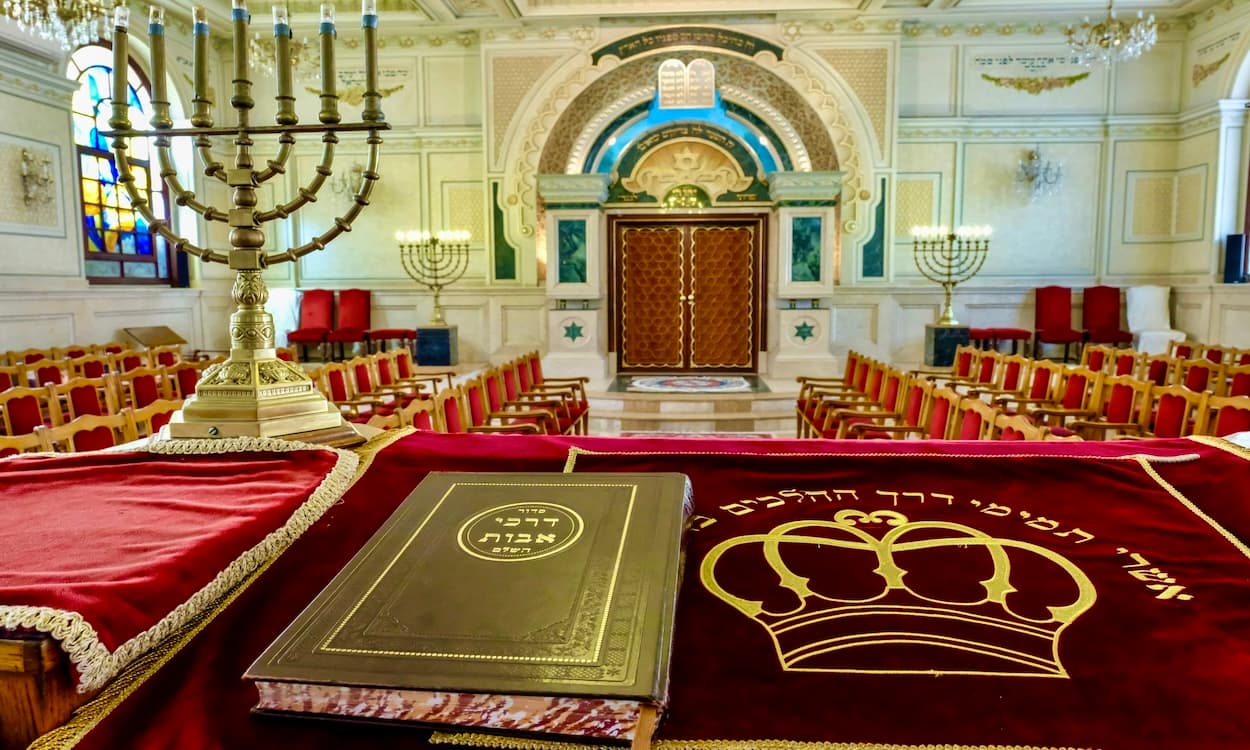
Jewish Heritage in Casablanca: Museum, Synagogues & Modern Community Life
Casablanca is home to the only Jewish museum in the Arab world, magnificent synagogues, and Morocco's largest remaining Jewish community. Discover the vibrant Jewish heritage of Morocco's economic capital.
Read Article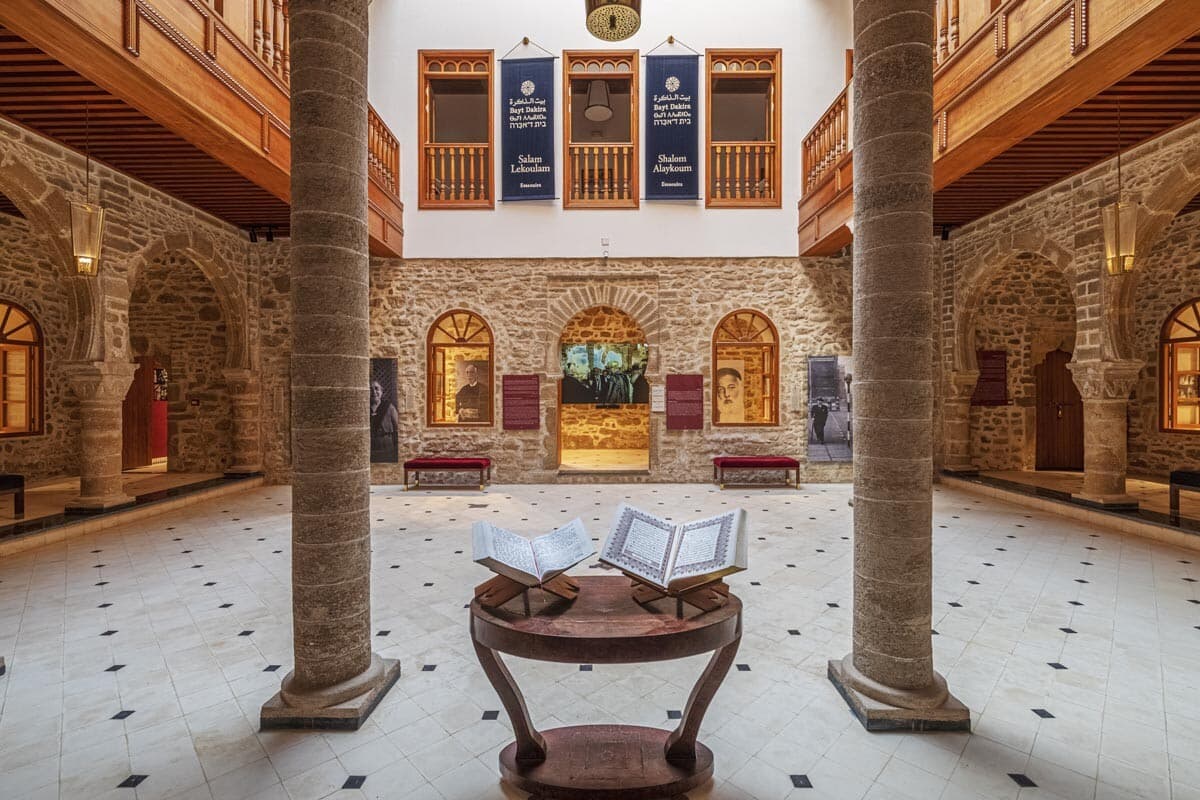
Essaouira's Jewish Story: From Slat Attia to Bayt Dakira Museum
Essaouira's Jewish heritage is experiencing a remarkable renaissance. Explore the Slat Attia synagogue, the Bayt Dakira museum, and the legacy of Jewish-Muslim coexistence on the Atlantic coast.
Read Article